About Us
Shaping the Future of Electromechanical Infrastructure
Driven by innovation and precise craftsmanship, we transform complex challenges into highly efficient and secure structural realities.
Who Are We
MANAKH was established as a local limited liability company
(License No. 01041980025,
Registration No. 05010202408596) to bridge the gap in high-end Mechanical, Electrical, and Plumbing (MEP) execution across various economic and industrial sectors in Libya.
Backed by highly experienced project managers, dedicated designers, CAD/Revit engineers, and specialized field technicians, we structured our corporation to deliver integrated engineering contracting, drawing reviews, and precise estimations.
Our Vision
To provide world-class electromechanical services that drive the modernization of local infrastructure, setting new benchmarks for quality, execution speed, and cost-effectiveness.
What We Do
- MEP Consultancy & Drawing Reviews
- Central HVAC Systems
- In-House Duct Manufacturing
- Firefighting & Hazard Protection
- Plumbing & Sanitary Infrastructure
- Power Distribution (MV/LV)
- Smart Building Automation & ELV
- HSE & Industrial Safety Management
Our 6-D Process
01.
Initial Consultation & Audit
Meeting with clients to define project objectives, analyze requirements, and review initial technical scopes.
02.
Engineering & Layout Design
Developing and auditing comprehensive MEP blueprints and drafting precise engineering plans to resolve design constraints early on.
03.
In-House Manufacturing & Procurement
Fabricating customized air ducts in our facility and sourcing high-tier equipment from trusted global manufacturing partners.
04.
On-Site Execution & Installation
Deploying expert engineering and technical teams to execute heavy-duty mechanical, electrical, and plumbing infrastructure flawlessly.
05.
HSE Compliance & Quality Assurance
Implementing rigorous site safety protocols and structural inspections to ensure 100% compliance with international engineering codes.
06.
Commissioning & Handover
Conducting comprehensive system testing, operational balancing, and formal project handover, backed by continuous post-launch maintenance support.
Why Choose Us?
Because we merge over 12 years of proven engineering expertise with strict compliance to global health, safety, and environmental (HSE) standards. Driven by our in-house manufacturing capabilities and elite international partnerships, we deliver top-tier, reliable electromechanical (MEP) solutions tailored to power your vital infrastructure
Our engineering workflows integrate cutting-edge software solutions, including AutoCAD, Revit, HAP, and Elite, for flawless modeling and calculations.
We operate our own specialized duct manufacturing facility using top-tier, internationally imported pre-isolated plates to guarantee durability and precise seamless finishes.
Led by senior specialists with extensive history in complex industrial and oil sectors, our operations stringently adhere to international Health, Safety, and Environmental codes.
Some Numbers
Our growth is defined by measurable metrics and solid engineering milestones. We translate client trust and world-class partnerships into high-performance, resilient infrastructure across every project.”
Years of Longitudinal Technical Experience
LYD Capital Investment
Trusted International Partners & Manufacturers
Trusted International Partners & Manufacturers
Our Portfolio
Project Title:
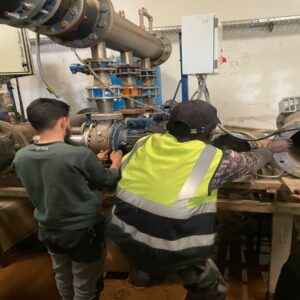
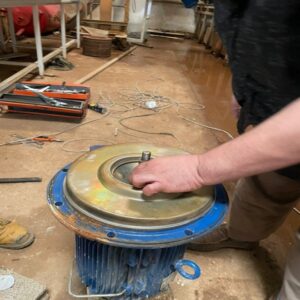
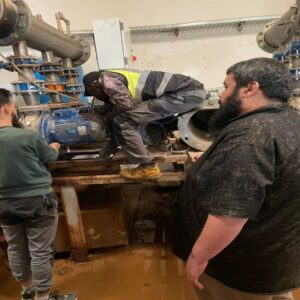
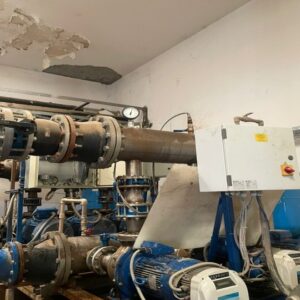
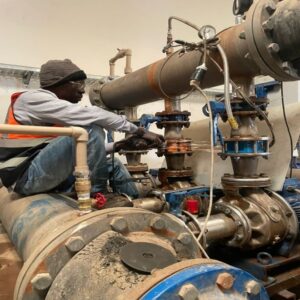
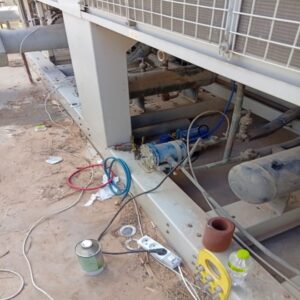
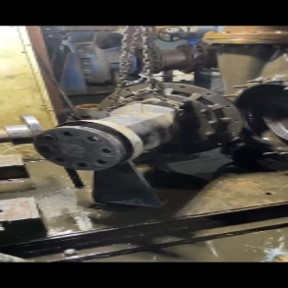
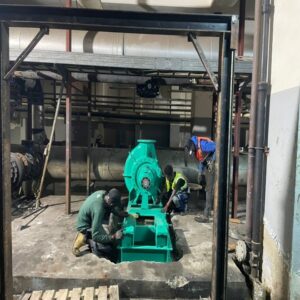
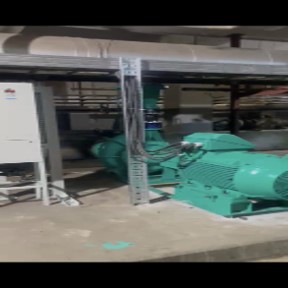
Supply and Installation of Two (2) Wilo Water Pumps
The procurement, installation, and commissioning of two (2) horizontal centrifugal Wilo water pumps were successfully executed, encompassing the following technical activities:
Procurement: Supplied the centrifugal pumps, electric motors, and all associated standard accessories.
Foundation Preparation: Fabricated and deployed heavy-duty steel base frames, ensuring precise leveling, axis alignment, and structural positioning.
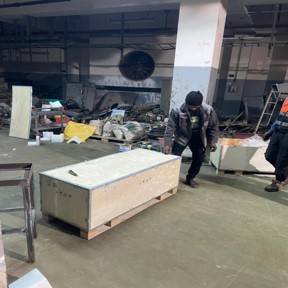
Rigging & Placement: Lowered and positioned the pump units safely onto their designated locations utilizing appropriate heavy-lifting equipment.
Mechanical Alignment: Performed precision laser/mechanical alignment between the pumps and electric motors to guarantee optimal vibration-free operation.
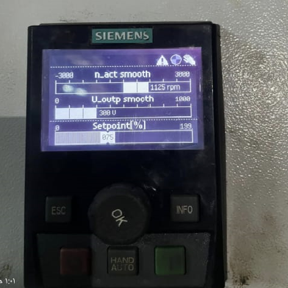
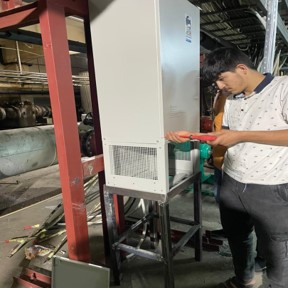
Control Panels & VFDs: Installed dedicated electrical control panels integrated with Variable Frequency Drives (VFDs) for precise motor speed regulation.
Electrical Cabling: Executed comprehensive power cabling, wire routing, and secure terminations inside the main control panels.
Technical Inspection: Audited all mechanical joints and electrical terminations to verify full compliance with approved engineering specifications.
Pre-Commissioning: Conducted preliminary dry runs and pre-commissioning checks, successfully verifying phase rotation and motor shaft direction.
Testing & Commissioning: Executed full operational testing and balancing, recording and validating baseline parameters for discharge pressure, flow rates, and current draw (amperage).
Vibration Isolation: Mounted the pump assemblies onto the new steel bases using specialized anti-vibration isolators and dampers.
Rigging Safety: Strictly utilized certified lifting and rigging gear during all critical installation and alignment phases.
Final System Handover: Concluded all testing phases and initial functional runs to secure immediate system readiness.
Progress Status:
100% Completed. The procurement, installation, and testing/commissioning of both pumps have been fully executed with total success. The entire pumping system is completely operational and ready for live service.
Project Title:
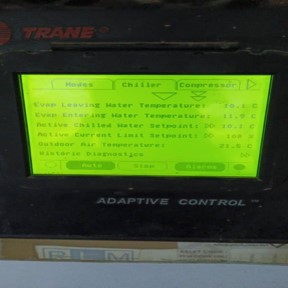
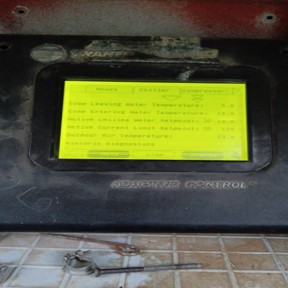
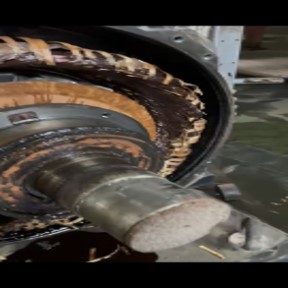
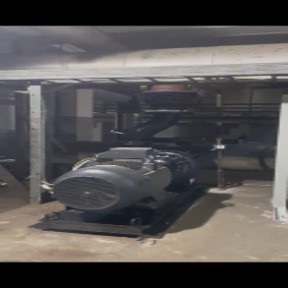
Abu Slim Hospital Project Report
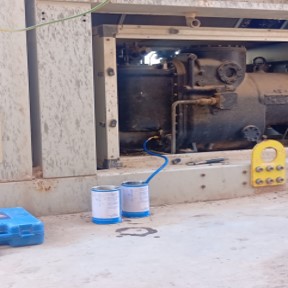
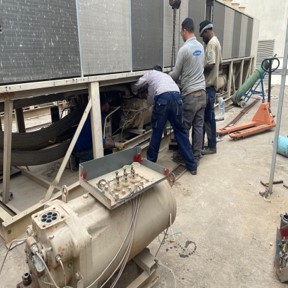
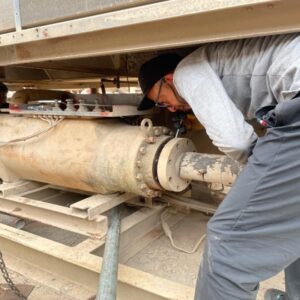
Comprehensive inspection, maintenance, and rehabilitation works were successfully executed on the chiller system following technical malfunctions within the refrigeration and control circuits that degraded overall operational efficiency. The scope encompassed detailed mechanical and electrical assessments alongside rigorous testing to safely restore the equipment to its optimal baseline operational state.
First: Refrigeration Circuit (Mechanical) Works
System Diagnosis: Conducted an exhaustive inspection across all refrigeration circuits to localize system faults and pinpoint refrigerant leaks.
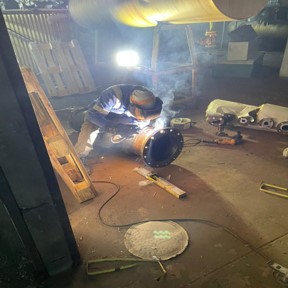
Leak Repair & Brazing: Repaired all identified leaks and performed professional welding operations using nitrogen gas purging to prevent internal oxidation.
Pressure Testing: Conducted high-pressure leak testing on all circuits using nitrogen gas to verify structural integrity and ensure a completely sealed system.
Dehydration & Vacuum: Executed a deep vacuum process to thoroughly eliminate air, moisture, and non-condensable gases from the circuits.
Oil Inspection: Checked compressor oil levels and verified lubricant condition/purity.
Filter Replacement: Replaced existing liquid line filter driers with brand new units matching approved technical specifications.
Flow Switch Installation: Supplied and installed a new water flow switch to safeguard the evaporator.
Sensor Calibration: Inspected and recalibrated all system sensors, replacing defective or drifted units.
Coil Cleaning: Cleaned external condenser coils to optimize heat transfer and heat rejection efficiency.
Condenser Fan Audit: Inspected condenser fans to verify structural integrity, balance, and smooth mechanical operation.
Refrigerant Recharging: Recharged the circuits with the precise volume of refrigerant gas in strict compliance with the manufacturer’s technical specifications.
Second: Electrical & Control Works
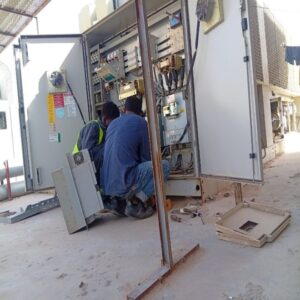
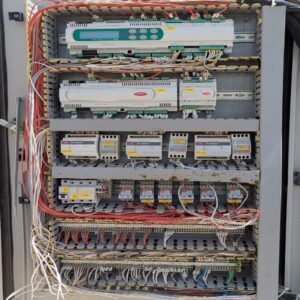
Panel Inspection: Conducted a comprehensive audit of all electrical power and control enclosures.
Circuit Testing: Inspected power and control circuits to verify the integrity and continuity of all internal components.
Fault Rectification: Successfully troubleshot and resolved all electrical faults detected during the initial inspection phase.
Protection Device Audit: Tested circuit breakers, fuses, and overcurrent protection devices, replacing all defective units.
Cable Management: Verified all electrical terminations, retightening connections, and organizing internal cabinet routing.
Control & Interlock Testing: Tested control loops and safety interlocks to confirm accurate and responsive system protection.
Third: Operational Testing & Commissioning
System Startup: Initialized the chiller post-maintenance under engineered startup protocols.
Parameter Monitoring: Monitored baseline operating pressures and temperatures across all active refrigeration circuits.
Electrical Load Measurement: Recorded and evaluated the amperage and voltage draws for all compressors and condenser fans.
Stability Verification: Ensured total operational stability with zero active faults, alarms, or trips.
Post-Launch Leak Check: Conducted final inspections to guarantee zero refrigerant or oil leaks under live pressure.
Performance Evaluation: Tested chiller performance and thermal load pulling under actual facility operating conditions.
Project Outcomes & Results
Following the successful completion of maintenance and operational commissioning, the following milestones were achieved:
All refrigeration circuits are operating normally within standard parameters.
The system is completely sealed with zero refrigerant or oil leaks.
Operating pressures, compression ratios, and temperatures sit firmly within the manufacturer’s permissible limits.
All safety controls, sensors, and protection interlocks are fully functional and highly efficient.
The chiller is completely operational and ready for continuous, heavy-duty service at its full factory design capacity.
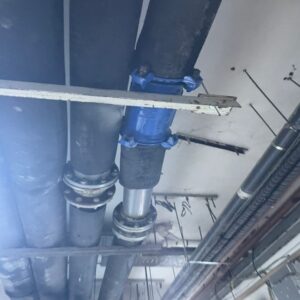
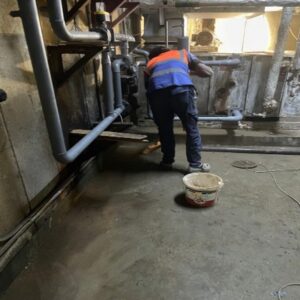
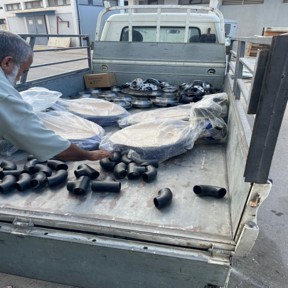
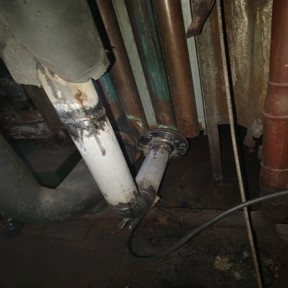
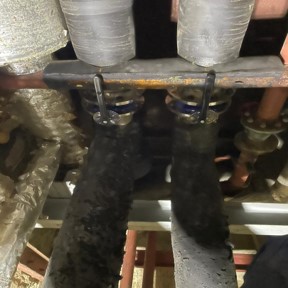
Second: Hydraulic Network (Chilled Water Piping)
1. Circuit Assessment & Testing
Technical Evaluation: Assessed the technical condition of the chilled water circuits connected to the target chillers prior to system activation.
Pressure Testing: Executed a comprehensive hydrostatic pressure test across the network to verify the structural integrity of all pipes, joints, fittings, and connected equipment.
Leak Remediation: Identified, localized, and repaired all leaks and structural weak points detected during the testing phase.
Design Pressure Verification: Confirmed the network’s ability to safely withstand the required design operating pressures.
2. System Flushing & Water Treatment
Network Flushing: Executed a complete flushing and chemical washing cycle for the chilled water piping circuits.
Debris Removal: Thoroughly eliminated accumulated sludge, scale, sediment, and impurities from inside the pipes and heat exchangers.
Line Cleaning: Cleaned both main headers and branch lines to guarantee smooth, unobstructed water flow.
Water Quality Assurance: Verified water clarity and ensured it was completely free of suspended solids or contaminants that could degrade operational efficiency or shorten equipment lifespan.
3. Component Inspection & Maintenance
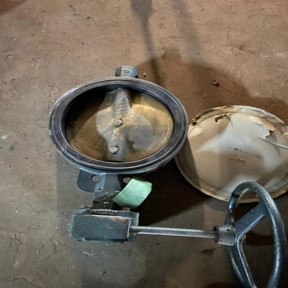
Control Valves: Inspected all motorized and manual control valves, verifying accurate modulation and performing necessary mechanical maintenance.
Isolation & Check Valves: Audited isolation valves and non-return (check) valves to confirm tight shut-off and complete operational readiness.
Strainer Maintenance: Inspected and deep-cleaned all water strainers, removing trapped debris to prevent pressure drops and maintain optimal flow velocity.
4. Testing & Commissioning
System Refilling: Recharged and refilled the piping network with water in strict compliance with approved engineering procedures.
Air Venting: Executed complete air venting protocols from all high-point vents and purging stations across the network to prevent air pockets and cavitation.
Trial Run: Initialized a dynamic trial run of the hydronic system to closely monitor overall network behavior.
Data Logging & Monitoring: Recorded, monitored, and analyzed the following baseline metrics:
Operating pressures (Suction/Discharge).
Volumetric flow rates.
Temperature differential ($\Delta T$) between the chilled water supply and return lines.
Operational performance of circulating pumps and balancing valves.
Stability Verification: Confirmed total hydronic stability, verifying zero pressure drops, thermal leaks, or mechanical faults before final handover.
Project Outcomes & Results
The structural integrity and technical safety of the chilled water network have been fully verified.
The system is completely prepared to supply the chillers, fully capable of achieving and sustaining all designed thermal and volumetric operating requirements with high efficiency and stability.
Third: Circulating Pumps
Introduction
Comprehensive inspection and routine maintenance works were successfully executed on the chilled water circulation system. The scope encompassed the circulating pumps alongside all associated mechanical and electrical accessories, carried out in strict accordance with engineering standards and manufacturer operation and maintenance (O&M) manuals.
Executed Scope of Work
Pump Assessment: Inspected the chilled water circulating pumps, evaluating their overall technical condition and verifying the structural integrity of the pump casings, impellers, and drive shafts.
Line & Flow Audit: Audited the suction and discharge lines to ensure unobstructed hydraulic flow within the system and to guarantee the absolute absence of blockages or restrictions affecting performance.
Parameter Calibration: Measured operational discharge/suction pressures, volumetric flow rates, and motor current draws, benchmarking them against original design curves.
Bearing Maintenance: Inspected the mechanical bearings to verify smooth rotation, ensuring they were free from excessive vibration or abnormal noise, followed by re-lubrication using approved high-tier grease.
Mechanical Seal Inspection: Checked the mechanical seals to verify zero water leakage, structural integrity of components, and precise axial alignment.
Electrical Audit: Conducted thorough inspection and preventive maintenance on all electrical infrastructure, including power cables, terminal connections, contactors, overload relays, circuit breakers, and control panels.
Insulation & Protection Testing: Performed electrical insulation resistance testing (Megger test), recorded voltage and current balances, and verified the functionality of all electrical safety circuits.
Safety Interlock Verification: Tested and certified the operational responsiveness of critical protection devices and relays, specifically:
Thermal Protection
Phase Failure Relays
Overload Protection
Project Outcomes & Results
The technical inspection and maintenance routine have been successfully finalized.
Dynamic testing confirms that the pumping system operates with high stability, maintaining all baseline metrics well within design limits.
Recommendation: It is highly recommended to strictly adhere to the scheduled preventive maintenance program to sustain peak operational efficiency and maximize the equipment’s lifespan.
Fourth: Expansion & Make-up Tanks
Executed Scope of Work
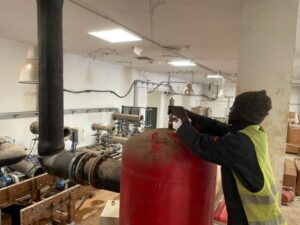
Tank Structural Assessment: Inspected the expansion and make-up tanks to verify casing integrity, evaluate internal air/bladder pre-charge pressure, and ensure zero structural leaks.
System Trial & Dynamic Run: Conducted dynamic trial runs of the system to verify the stability of operating pressures, electrical current consistency, and the total absence of abnormal vibrations, noise, or leaks during active operation.
Fittings & Accessories Audit: Checked all connection lines, flanges, isolation valves, and tank accessories to confirm complete technical safety.
Leak Remediation: Addressed, sealed, and repaired all identified leaks within the tanks or their associated distribution lines.
Joint Tightening & Gasket Replacement: Retightened all structural connection points and replaced degraded gaskets, seals, and insulation materials wherever necessary to ensure zero-leak performance.
Post-Maintenance Testing: Tested the tanks post-repair to guarantee an absolute airtight/watertight seal and verify full containment enclosure.
Cleaning & Level Control Maintenance: Deep-cleaned the tanks and inspected the mechanical/electrical float valves and water level indicators to guarantee precise level-control regulation.
System Readiness: Certified the full operational readiness of the tanks, ensuring they are fully optimized to maintain static head pressure and volumetric stability within the chilled water network.
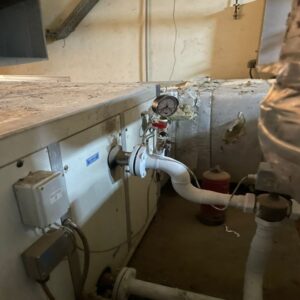
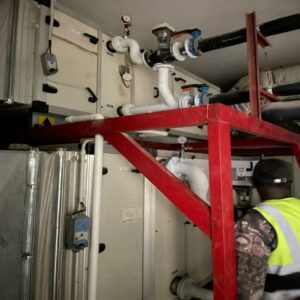
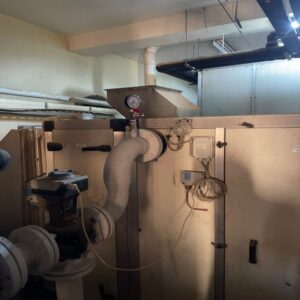
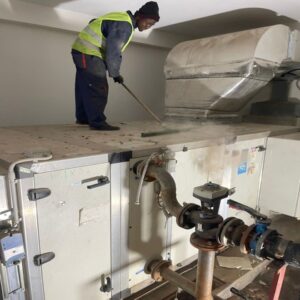
Fifth: Air Handling Units (AHU & FAHU)
Scope of Work – AHU & FAHU Maintenance
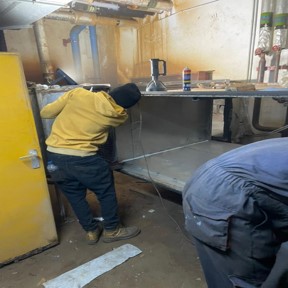
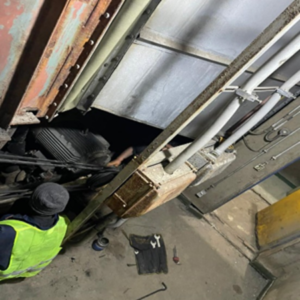
The scope of work encompasses comprehensive inspection, assessment, and preventive maintenance of Air Handling Units (AHUs) and Fresh Air Handling Units (FAHUs) in strict accordance with technical specifications and manufacturer O&M guidelines. The execution includes:
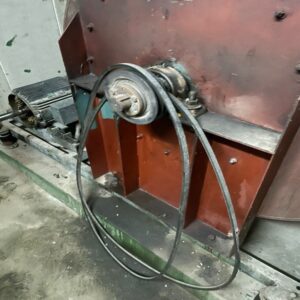
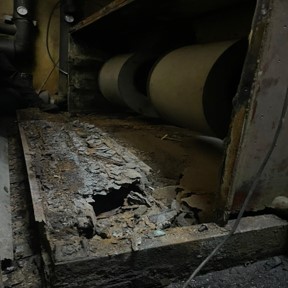
Mechanical Maintenance: Inspection and servicing of fans, electric motors, drive belts, pulleys, and bearings. This also includes performing precision mechanical alignment and dynamic balancing, along with the replacement of any worn-out or defective components.
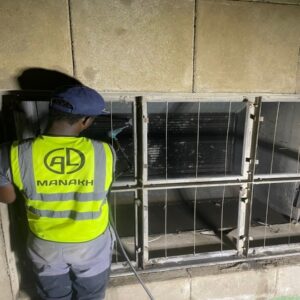
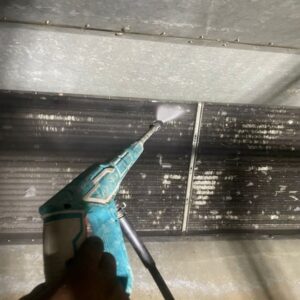
Filter & Coil Service: Supplying and installing high-performance certified filters, in addition to deep-cleaning cooling coils, condensate pans, and drainage lines.
Hydraulic System Audit: Inspecting the water piping network and associated valves to ensure absolute leak-free operation.
Electrical & Control Systems: Comprehensive inspection and maintenance of all electrical components, protection relays, and control systems, including the troubleshooting and rectification of all identified faults.
Ductwork & Insulation: Inspecting air distribution ducts and thermal insulation, sealing air leaks to prevent thermal loss, and restoring duct integrity.
Instrumentation & Calibration: Supplying and installing pressure and temperature gauges to enable precise system monitoring.
Operational Testing & Balancing: Executing full operational tests, calibrating control parameters, and verifying both air and water volumetric flow rates to match design requirements.
System Handover: Ensuring the units are restored to a stable, highly efficient operational state, fully compliant with the original design performance requirements.
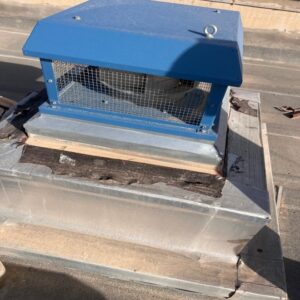
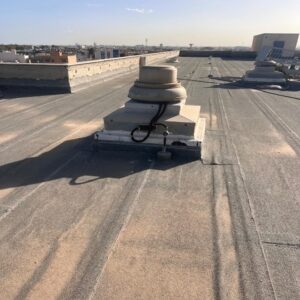
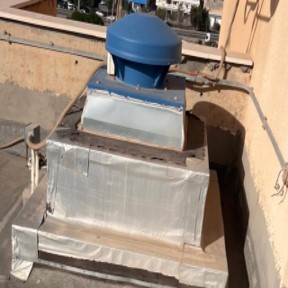
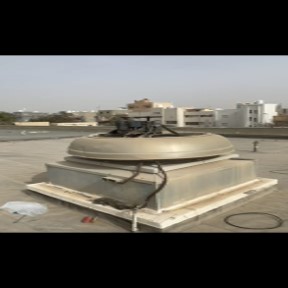
Sixth: Exhaust Fans
Inspection, Maintenance, and Replacement of Exhaust Fans
The scope of work encompasses comprehensive technical inspection and assessment of the exhaust fans, executing all necessary preventive and corrective maintenance activities, and replacing worn-out components or entire fan units where required, in strict accordance with manufacturer recommendations and approved engineering practices.
The executed activities include the following:
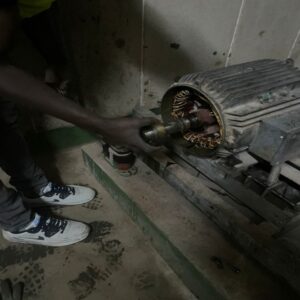
General Assessment: Inspected the overall structural and technical condition of the fan assemblies and electric motors.
Electrical Load Measurement: Measured operating current draws (amperage) to verify safe and stable electrical performance.
Bearing Maintenance: Inspected mechanical bearings, executing re-lubrication protocols or complete replacements as required.
Belts & Pulleys Audit: Checked drive belts and pulleys, adjusting tension parameters or replacing degraded components.
Impeller Cleaning: Deep-cleaned fan blades/impellers to eliminate accumulated dust, grease, and debris, restoring aerodynamic balance.
Vibration Isolation: Inspected structural mounting bases, anchor points, and anti-vibration isolators.
Electrical Infrastructure: Audited all electrical terminal connections, power cabling, and local control panels.
Motor & Fan Rectification: Repaired or replaced defective electric motors and damaged fan units where necessary.
Performance Commissioning: Conducted final operational testing, evaluating air extraction and discharge efficiency to confirm peak performance.